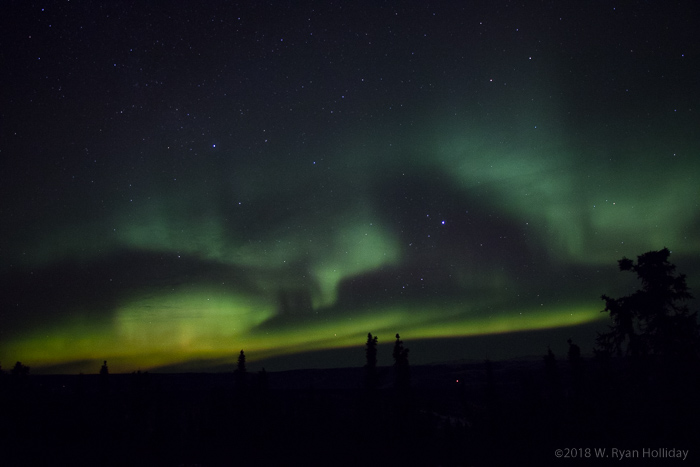
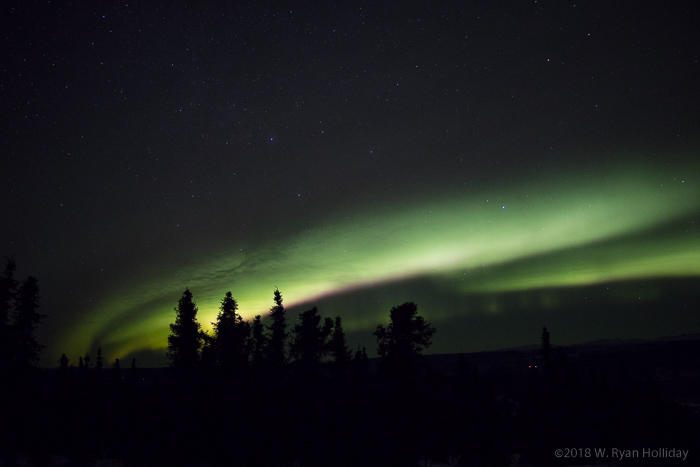
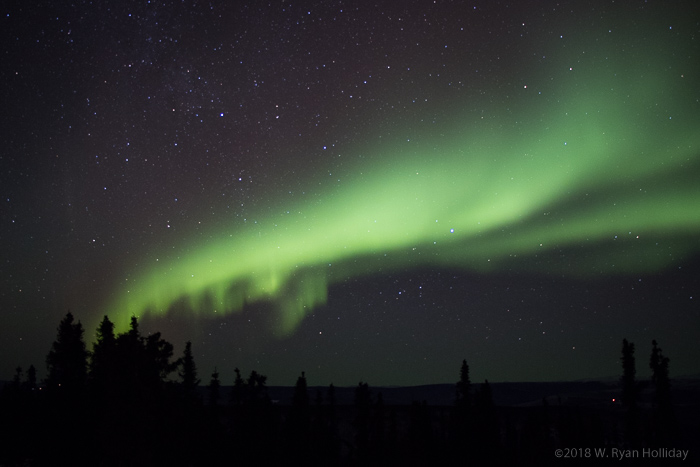
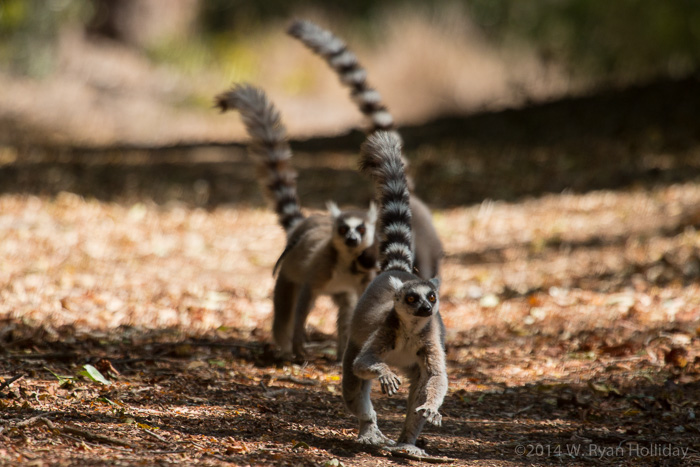
Almost exactly three years ago today Audrey and I were having breakfast with lemurs in Madagascar; there may be a need to start planning another adventure soon…

"My life amounts to no more than one drop in a limitless ocean. Yet what is any ocean, but a multitude of drops?" — David Mitchell
Almost exactly three years ago today Audrey and I were having breakfast with lemurs in Madagascar; there may be a need to start planning another adventure soon…

Due to some changes on my current project, I recently had to fly to San Antonio on back-to-back weeks. During the first trip I lost my license but was still able to fly after a THOROUGH pat-down, and on the second trip Hurricane Harvey showed up and attempted to wipe Texas off of the map.
When I flew to Texas on Sunday Harvey was down near Mexico, and had dissipated to the point where it was no longer a recognizable storm; no one outside of a few meteorologists had any clue that it was anything worth keeping an eye on. As late as Monday there was still no storm on the horizon, but Tuesday morning there were some reports on the news that a tropical storm might be headed to Texas.
By Tuesday afternoon things started looking more dire, and the airlines began offering the option to switch to an earlier flight for free in order to allow people to escape while the airport was still in operation. The storm track showed a strengthening storm heading directly at San Antonio, and by Wednesday, not only was the storm supposed to strengthen to hurricane status, but it was then projected to stall over San Antonio for three days. Facing the prospect of a hurricane and three days of flooding, I switched to a Thursday flight and made an early escape from Texas.
Of course everyone knows what then happened – the storm track changed slightly, and Harvey instead stalled over Houston, causing widespread damage to Houston while having minimal impact on San Antonio. On a positive note, the company I’m currently working with immediately sent 15 vehicles, including two mobile kitchens, up to Houston, and the e-commerce team’s first task on Monday was to set up a donation page – during a time of much cynicism about corporate America, HEB is clearly an organization with its heart in the right place.
It’s not clear when they’ll next need me back in Texas, but given the experience from the last two trips I’ll prepare for the journey by taping my identification to my arm, and with sufficient emergency supplies in my luggage to weather whatever disaster Mother Nature might decide to send.
I had to make back-to-back work trips to San Antonio recently, and while normally those trips are fairly routine events, these last two both involved a fair amount of drama. Here’s the recap from the first trip…
Audrey has a phobia about packing – any time she travels she gets into a panic thinking that she might forget something. On the opposite end of the spectrum, my theory is that you should try to remember everything, but there are only a tiny number of things that you absolutely can’t forget, and as long as you have those things you’re going to be fine: money, identification, and clean underwear. Even with such a short list (and if we’re being honest, forgetting underwear isn’t a dealbreaker), on one of my most recent trips to San Antonio I blew it but was saved by TSA.
I registered for TSA Pre a while back, and it is awesome – I spend almost no time waiting in security lines now – but the one minor downside is that I often don’t have time to get out my license and boarding pass before I’m standing in front of an impatient TSA agent. On this particular trip, to ensure that I would be ready I got my license out of my wallet while in the Lyft to the airport, but on entering the terminal realized that it was no longer in my pocket where I’d placed it. I retraced my steps to the curb, and then called the Lyft driver only to be told that he didn’t think it was in his car and that he had another passenger so he wasn’t going to come back to the terminal. I then talked to airport security, who told me that no one had turned in a license but that I could still fly as long as I had a credit card or something with my name on it.
I got in the TSA line, and after reaching the officer at the front of the line sheepishly said that I had lost my license because apparently I haven’t figured out how to use pants pockets properly. The officer smiled, called in another officer to ask me a few questions, and then told me I would get a patdown where the agent would use the back of his hand to search “certain areas”. After a VERY thorough patdown they then checked all of my carryons for bomb juice, and then sent me on my way; apparently a search of the family jewels using the back of the officer’s hand is as good as photo ID. The whole thing took no more than five minutes, everyone was amazingly friendly to the dumb guy who lost his license, and instead of having to go home and miss my flight I had coffee at 30,000 feet. The process repeated itself on the return trip, and again I was able to board my flight on time.
TSA gets bashed a lot, in some cases rightfully so, but in this case I did a dumb thing and they bailed me out, and did so with professionalism. Too often in this world we get angry when things go wrong but take it for granted when things go right, so in a case where things went right I offer my sincere gratitude to the TSA folks.
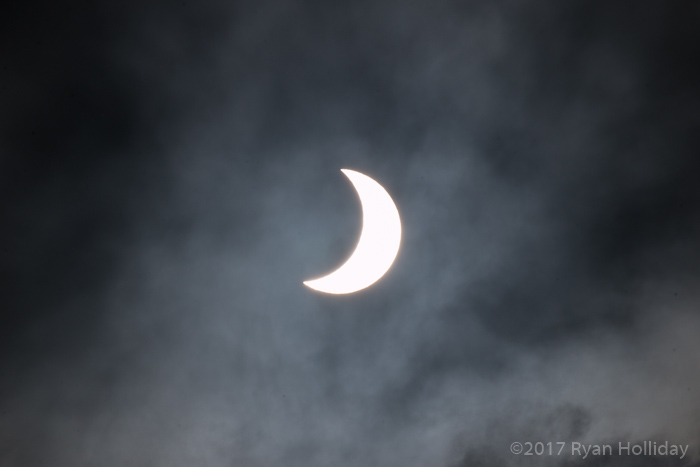
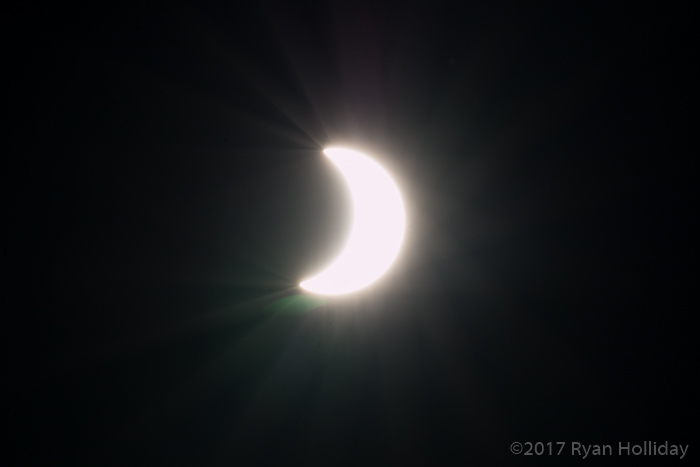
Since obviously eclipse glasses are for wimps (and also I didn’t buy any before the prices exploded), I took a zoom lens into the backyard and attempted to focus as much sunlight on my retinas as possible; my vision should return in time for the next eclipse in 2024.


So I’m obviously waaaaay behind on journal entries. In an effort to begin catching up, here’s the recap for July:


The journal celebrated its fifteenth anniversary on July 24, although I’m a bit behind on postings and thus this entry is being published two weeks after the actual date. In an era before Facebook and other social media, and even before the (awful) word “blog” had made it into most people’s vocabularies, this site was my way to record travelogues for posterity, and more importantly it gave me an excuse for being too lazy to send people regular emails, since I could just point everyone to this site as a way to keep in touch.
The obligatory stats to recap the past decade-and-a-half:
It’s anyone’s guess how long the journal will continue, but nearly 5,500 days after starting this narcissistic endeavor, there doesn’t seem to be any clear end in sight. Thanks to the twos of visitors who have read along regularly, and to the random folks who have dropped by on occasion to say hello and (incorrectly) point out typos.

It’s been too long without photos in the journal, so here are a couple from the 2014 safari in Tanzania that didn’t previously make it online:


I’m not sure if this subject has made it into a journal entry in the past or not, but my favorite theory of why America remains such a powerful force in the world seems like a good topic for a Fourth of July entry.
During my four decades of life it has been a common refrain that the US is on the decline and in danger of losing its position as the world’s leader in commerce and innovation. In the 1980s and 1990s it was seen as inevitable that Japan would soon take the lead position, and these days everyone seems to believe that China will do so. Yet somehow, despite falling behind in metrics like education, government investment, etc, the US still creates companies like Tesla, Google and Apple that lead the world.
A theory that I read a long while back is that the root of America’s success is literally encoded in our DNA – being unique as a nation of immigrants, nearly every citizen has in their family tree the DNA of someone who was motivated to leave their circumstances and go to a country where, if they worked hard, they could create a better life. In an evolutionary sense, the entire country is made up of people whose gene pool favors motivation, hard-work, and risk taking. As a result, in America if you create a business that fails, instead of being demeaned for failing you are rewarded for having tried. If a city declines and jobs disappear people don’t sit around and wait for improvement, but instead pack up and move to another city that offers better prospects. When an individual wants to follow a dream, it isn’t considered crazy for them to sell prized possessions or amass large debts in order to fund that dream and make it become reality.
There are of course a vast number of exceptions to the above examples, but moreso than any other country, Americans can be characterized by traits that trace back to ancestors who risked everything to come to a new place that offered hope of a better life. Furthermore, that hope wasn’t represented by the prospect of an easy life, but was instead based on a belief that hard work would be rewarded. On this Fourth of July I like to believe that the greatness of America might literally be encoded in the DNA of its citizens, a fact that makes me optimistic that, despite its stumbles, the success of this nation will continue.
June has been a slow month, but here’s a quick recap:
When I started this journal fifteen years ago the idea of reading a web page on a phone was still magic wizardry reserved for Captain Kirk and Mr. Spock, but in 2017 (actually, starting in about 2007…) wasting horizontal space with three columns is a design faux pas of the highest order. Thus, tonight I spent some time bringing the journal into the mobile age, and the site is now a svelte two columns, with some additional plumbing done to hopefully make the font more readable on small screens, and to allow the images to dynamically resize. While I’m a decent programmer, I have the aesthetic abilities of a blind trout, so suggested improvements are welcome, and if anything seems broken please let me know what browser you’re using and what problem you’re seeing and I’ll try to get it fixed.
Several weeks ago I decided that one of this month’s journal entries would be about why I’m optimistic that the problem of climate change is one that the world is going to solve, and the recent announcement from Trump that the US would join Syria and Nicaragua as the only nations not to be a part of the Paris Climate accords makes the subject even more appropriate.
To greatly oversimplify the issue of climate change, solving it means that clean energy needs to be a better option than fossil fuels in terms of cost and reliability. Looking at trendlines for both metrics, it seems that the world is underestimating how soon that tipping point is going to arrive.
Cost
In terms of cost, consider the following:
The health benefits of reducing air pollution from fossil fuels are an indirect cost, but according to the US Department of Energy:
Achieving the SunShot-level solar deployment targets — 14% of U.S. electricity demand met by solar in 2030 and 27% in 2050 — could reduce cumulative power-sector GHG emissions by 10% between 2015 and 2050, resulting in savings of $238–$252 billion… This could produce $167 billion in savings from lower future health and environmental damages, or 1.4¢/kWh-solar — while also preventing 25,000–59,000 premature deaths.
Reliability
From the standpoint of reliability, the fatal flaw for renewable energy is that it’s only available when the sun is shining or the wind is blowing, but cheap batteries allow renewable energy to be stored and used whenever needed, and they also provide huge benefits for the grid. Since its inception the electrical grid has required energy to be used as soon as it is produced, so grid operators have had to execute a complex process for matching output to demand, and also have had to ensure that enough generation is available to match the highest possible load, meaning some power plants exist solely to meet demand on those few summer days when everyone is running their air conditioners. As batteries get cheaper, suddenly that’s no longer the case – instead, you store energy to handle peak loads, generation capacity just has to match average load (so inefficient power plants can be retired), and grid reliability is no longer an issue.
Reliability of cars improve when the system goes electric, too. A gasoline engine is about 20% efficient, the electric motor is closer to 75% efficient. The gasoline engine has belts, pistons, and tons of other moving parts that can fail, the electric motor is essentially a simple shaft wrapped in wires that costs far less to produce. A gasoline car requires a complex, multi-speed transmission, an electric car has a simple, single-speed transmission. A gasoline car uses oil, requires an exhaust system, and has tons of belts and hoses, an electric car has none of those things. Twenty years from now, we’ll wonder why anyone ever put up with regular trips to the mechanic.
Finally, consider home solar. Today we accept that a transformer failure or a fallen tree can mean no power for a few hours, and that a natural disaster can mean power outages for days. However, as solar and batteries drop in price, the grid starts to look kind of crazy – why would anyone pay more to have an unreliable grid connection that requires flimsy high voltage wires to be strung through the neighborhood when a system that can generate power from sunlight and store a few days worth of backup energy is available for the same (or less) money?
Why the future is awesome
The timelines above suggest that within the next twenty years a renewable energy world will beat out fossil fuels on both a cost and reliability basis. Stretch that 30-50 years, and all sorts of interesting possibilities occur – to cite one, desalination is cost-prohibitive because it is energy intensive, but if energy is cheap then a city like Los Angeles, located next to the ocean but forced to import freshwater from hundreds of miles away, could conceivably generate more freshwater than it needs and actually start exporting water to the rest of the state. Citing another interesting possibility, cheap energy might make it feasible to begin scrubbing CO2 from the atmosphere, so not only would emissions drop as fossil fuels are phased out, but mankind could actually begin to forcibly remove some of the greenhouse gases that we’ve unleashed.
Leaving the Paris Accords seems like an unnecessary, self-inflicted wound for the country, but the rate of technological advance still gives me great hope that the problems the world faces are going to be overcome, with or without support from America’s political leadership.
Another month, another recap of that month…

I promise that this will be the last post about the Browns and Moneyball for a while, but with the 2017 NFL Draft now complete (quick summary: from a math perspective, awesome draft by the Browns) I wanted to revisit the 2016 trade of the #2 pick. I get that some people believe that Carson Wentz is going to be the second coming of Peyton Manning, but statistically he seems pretty average so far, and even if he turns out to be above-average, it’s really, really tough to argue with the numbers when you look at what the Browns have gotten for trading that draft pick. Moneyball now and forever.
| Browns trade: | Browns receive: |
|---|---|
|
|
1 via trade with Tennessee for 2016 First Round Pick (#8) & 2016 Sixth Round Pick (#176)
2 via trade with Carolina for 2016 Third Round Pick (#77) & 2016 Fifth Round Pick (#141)
3 via trade with Oakland for 2016 Fourth Round pick (#100)
4 via trade with Houston for 2017 First Round pick (#12)
At 1:48 AM last night, after months of regular visits, the master escape artist and king of all rats was finally caught. I was awoken around 2:30 AM by sounds from above, sleepily got out of bed, got the ladder out of the garage, climbed up to the attic, and finally came eye-to-eye with my nemesis. I brought the cage down to the kitchen, fed him some birdseed as a goodwill offering towards a respected adversary, and then proceeded to spend twenty minutes telling a rodent that he’d been a worthy opponent for these many months.
Since deciding to rid the attic of visitors I’ve emptied three cans of fill foam sealing gaps in the eaves, I’ve gotten a million scratches fashioning vent covers out of chicken wire, I’ve crawled through fiberglass insulation into claustrophobic corners of the attic looking for unseen gaps, and I’ve spent enough time running around on our roof that the neighbors have stopped bothering to ask what the hell I’m doing. Yesterday I made yet another trip to Home Depot to purchase foam, filling the last area I could think might possibly have a crack in it with an entire bottle of the caustic stuff, and coincidentally or not it was the final shot fired in our epic battle. I’ve obviously learned that my opponent is both cunning and numerous, so even though my tormenter of several months has been vanquished, the Ratcam will remain active in the attic for a few more weeks in case his followers come looking for their leader.
After driving him to the Ballona Wetlands Rat Sanctuary at 3AM last night, it was with a measure of sadness that I watched him scurry off into the gloomy darkness, bidding farewell to my cunning and relentless adversary. I truly hope that he’ll yet live a long life, happily tormenting the owners of the large homes on the bluff above the wetlands as he makes his nightly rounds.


Last Saturday Audrey and I attended the Science Parade, since science rules and we both wanted to contribute to ensuring that the crowd was large enough to get the attention of the Powers-That-Be. The following are observations from a newcomer to these types of events:
My views and personality are such that I won’t be attending too many marches, but as someone who works in a technical field and graduated college with two engineering degrees, getting up early on a Saturday in order to be counted as a supporter of science was a worthwhile effort that I’d happily repeat in the future, even if doing so means risking an antler to the cornea.